
DJI Power 1000 V2 Review: The Ultimate LFP Field Station for FPV Pilots
For years, the standard approach to FPV field charging has been cobbling together massive 18650 or 21700 Li-Ion battery packs. While they work, maintaining a giant DIY pack introduces safety risks, especially if you live in an apartment. I wanted a safer, more versatile field power solution with an AC inverter and stable Lithium Iron Phosphate (LFP) chemistry so I could finally sleep with peace of mind. Enter the DJI Power 1000 V2.
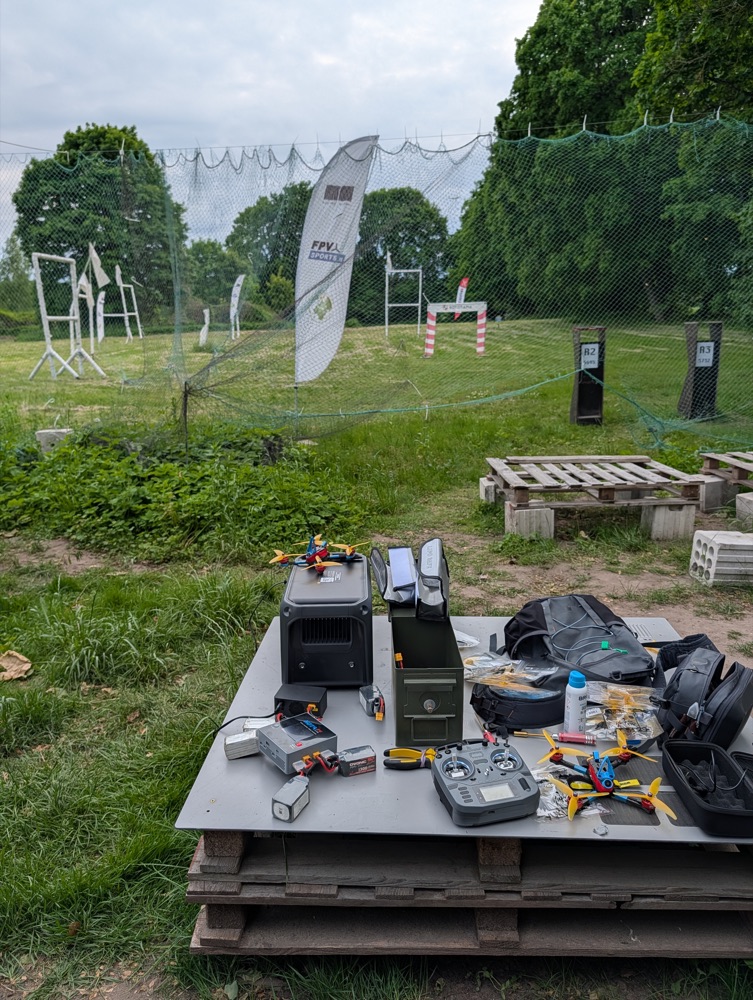
After dragging this unit to the track for countless practice sessions, it has proven to be an absolute tank. It isn't explicitly marketed to the hardcore 5-inch racing crowd, but its feature set aligns surprisingly well with our demanding field charging needs - with a few frustrating proprietary caveats.
Power Delivery & Field Charging Workflow
The primary requirement for any modern field station is the ability to dump power into flight packs as quickly and efficiently as possible.
USB-C PD Performance
The standout feature on the front panel is the dual 140W USB-C PD outputs. If you run modern USB-C PD field chargers, this is exactly what you want. Pulling DC power straight from these ports to charge LiPo batteries results in minimal energy loss compared to using an AC inverter.
The AC Inverter Reality
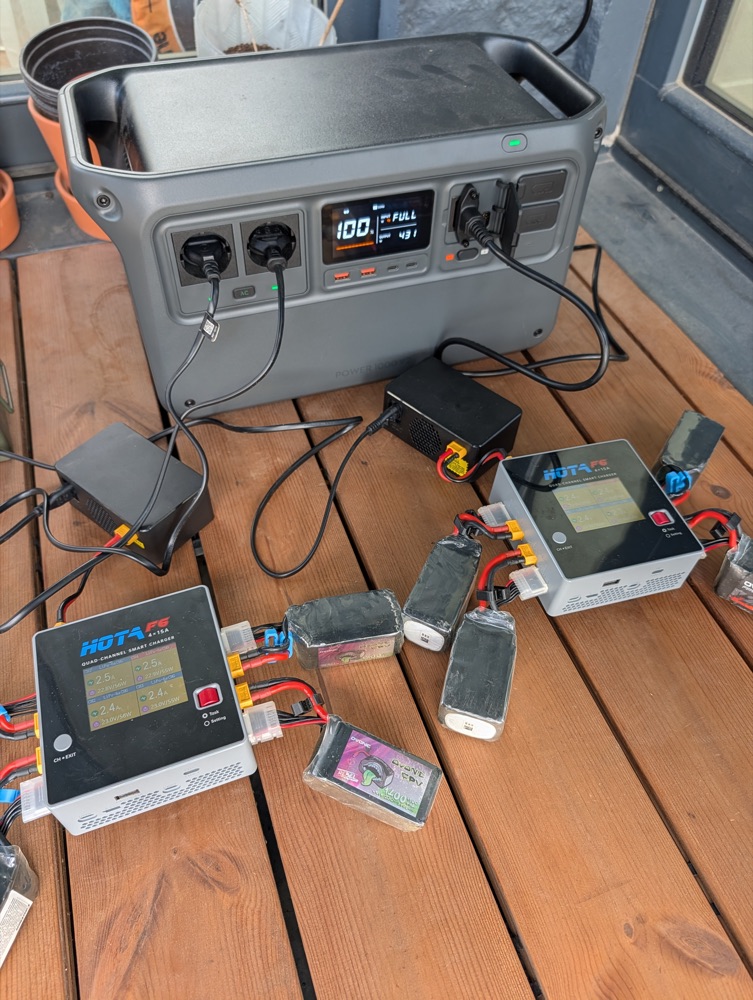
Despite the efficiency of the USB-C ports, the reality of a heavy track day is that I often just want to plug in my dual HOTA F6 4-channel chargers and blast 8 batteries simultaneously. This is where the built-in AC inverter shines. Yes, using the inverter introduces conversion losses, but the 1024Wh capacity is massive. More often than not, I get physically tired of flying laps around the track before I actually deplete the station's reserves.
Pit Tip - Pass-Through Charging Prep: The DJI Power 1000 V2 supports true power pass-through. My pre-race prep involves plugging the station into the wall at home, then plugging both of my HOTA F6 chargers directly into the station. I can charge 8 flight packs and top up the power station itself simultaneously. Once everything is done, I simply unplug the station from the wall and grab the entire rig by the handle on my way out the door.
The Proprietary SDC Connector Flaw
Here is the biggest letdown for custom builders: the proprietary SDC connector. DJI offers an SDC to XT60 adapter, which sounds like a dream for powering standard DC chargers. However, DJI severely throttles the output on this adapter. The full power capabilities of the SDC port are strictly reserved for proprietary DJI drone batteries (like the Mavic series). If you want to pull heavy amperage for a standard XT60 parallel board or high-wattage DC charger, you are artificially limited. You are better off relying on the AC inverter or the 140W USB-C ports.
Build Quality & Ergonomics
Tipping the scales at 14.2 kg (31.3 lbs), this unit is undeniably heavy, but the ergonomics are excellent. The integrated grip is incredibly comfortable, and the overall build quality is superb. It feels like a tank. I have zero hesitation tossing it into the back of the car alongside toolboxes and dirty quads. It handles the dust and abuse of an outdoor racing track without issue.
Note: It does not have a built-in solar inverter. For FPV track days, this is a non-issue. I never exceed the 1kWh capacity during a standard practice session, rendering track-side solar panels completely unnecessary.
Specifications Breakdown
| Specification | Details |
|---|---|
| Battery Chemistry | LFP (Lithium Iron Phosphate) |
| Capacity | 1024 Wh (Expandable up to 11,264 Wh) |
| Weight | 14.2 kg (31.3 lbs) |
| Max AC Output | 2600W Continuous |
| USB-C Output | 2x 140W Power Delivery |
| DC Output | SDC / SDC Lite (XT60 via adapter, throttled) |
| Fast Charging (Grid) | 0% to 100% in 56 minutes (0% to 80% in 37 mins) |
| Noise Level | 26 dB (Ultra-quiet during charging) |
| Pass-Through Charging | Supported |
| Solar Charging | No built-in solar inverter |
Pros & Cons
Pros
- LFP Chemistry: Inherently safe thermal profile; perfect for apartment storage.
- Pass-Through Charging: Great for streamlined pre-race bench charging.
- Dual 140W USB-C: Highly efficient for powering modern DC smart chargers.
- Tank-Like Build: Extremely rugged with comfortable carrying ergonomics.
Cons
- Proprietary Throttling: SDC to XT60 adapter limits power output to protect DJI's battery ecosystem.
- Weight: It is undeniably heavy to lug from the parking lot to the flight line.
- No Solar Inverter: Not an issue for racing, but limits off-grid camping utility.
Where to Buy
- Directly from DJI (Recommended): Buying direct from the DJI Store is usually the safest bet for warranty support and fresh inventory.
- Local Retailers: Look out for rare discounts from regional resellers trying to clear out warehouse stock, but verify return policies before committing.
Final Verdict
If you are tired of the anxiety that comes with storing massive DIY Li-Ion field packs in your apartment, the DJI Power 1000 V2 is a phenomenal upgrade. Despite the frustrating proprietary limitations on the XT60 adapter, the massive capacity, flawless pass-through charging, and rugged build make it an exceptional pit companion for heavy track days. Just prepare yourself for the heavy lift from the car.