
iFlight Borg 5S ELRS RX + 60RS Stack Review: Great Concept, Flawed Execution
Finding the ideal electronics for a modern 5-inch FPV racing drone is always a delicate balance between weight, stack height, wiring clutter, and crash survivability. The iFlight Borg 5S ELRS RX + 60RS BL32 stack immediately caught my eye with two massive promises on paper: an onboard ExpressLRS receiver to eliminate external RX wiring, and a 60A 4-in-1 ESC with integrated capacitors to completely ditch the bulky external low-ESR capacitor.
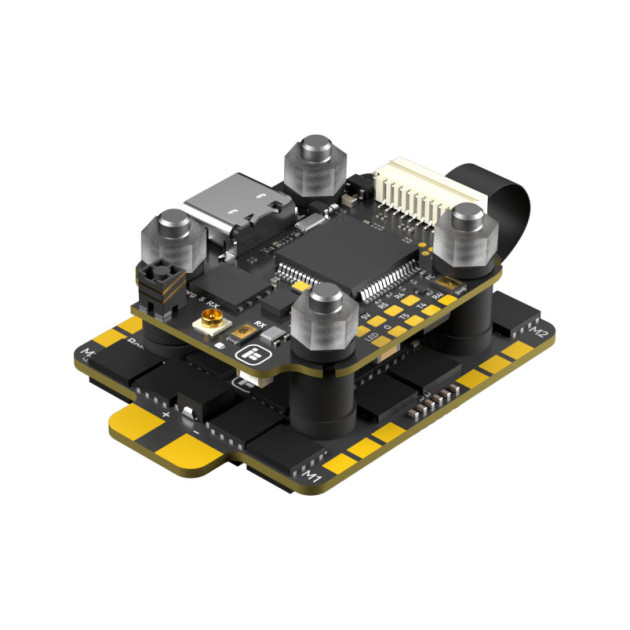
On paper, this sounds like a dream setup for a clean, ultralight race rig. But after putting this stack through real-world race practice and workbench repairs, the reality turned out to be a classic case of great concept compromised by physical layout flaws and practical field limitations.
Here is the complete breakdown of what works, what fails, and how to make the best of this hardware.
iFlight Borg 5S ELRS RX Flight Controller: A Frustrating Layout
The flight controller is, unfortunately, one of the most frustrating FC designs I have encountered for dedicated racing builds.
1. Excessive Stack Height & Minimal VTX Clearance
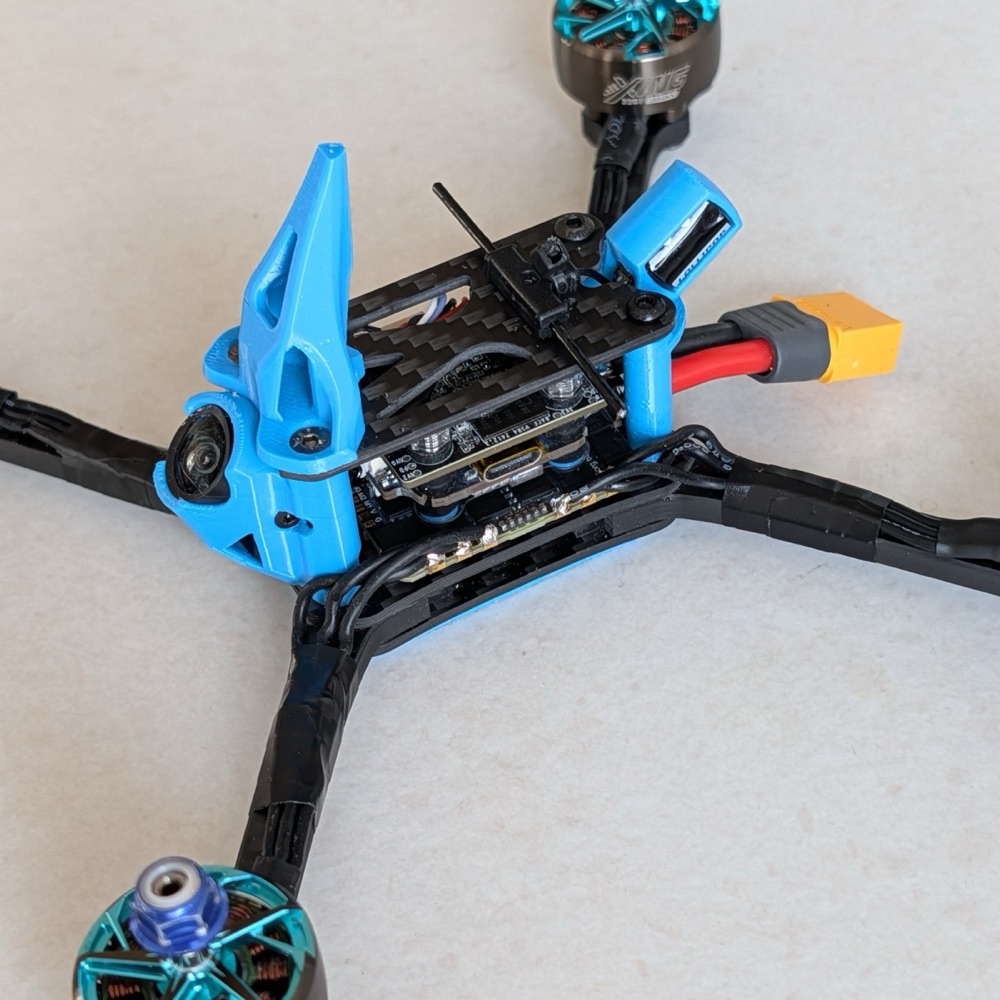
Modern racing frames are increasingly compact and "slammed" to keep weight centralized and frontal area minimal. The Borg FC places tall surface-mount components on both the top and bottom of the board. This forces generous spacing above the ESC and leaves the overall stack height unreasonably tall.
Because the stack consumes almost the entire internal frame height, there is virtually no vertical room left for mounting a video transmitter - making it an enormous struggle to fit larger units like the HDZero Race VTX.
2. Tower Antenna vs. HDZero Race VTX
The FC comes equipped with a vertical ceramic tower antenna for the onboard ExpressLRS receiver. In a compact racing pod, this vertical tower antenna collided directly with the HDZero Race VTX. To even mount the video transmitter, I had to physically break off the ceramic tower antenna to regain clearance.
3. Peripheral Connector Jamming the Camera MIPI Connector
Instead of standard solder pads or a well-placed low-profile harness, iFlight opted for a single multi-pin peripheral plug. The positioning of this plug is poorly considered - it protrudes outward and pokes directly into the FPV camera's MIPI connector. This creates unnecessary mechanical stress on fragile camera ribbon cables and severely restricts camera tilt angles.
4. RF Performance & RXloss Failsafes
After breaking off the ceramic tower antenna, I bridged the onboard solder selector pad to enable the external antenna connector and connected an external T-style ELRS dipole antenna.
Even with a proper external T-antenna installed, the onboard receiver failed to deliver the rock-solid link required for racing. During race practice heats, I experienced random RXloss failsafes. On a race track where consistency is everything, intermittent link drops are an immediate dealbreaker.
FC Verdict: Poor component placement, clearance conflicts with HDZero and camera MIPI cables, and questionable RF reliability make the Borg FC impossible to recommend for serious racing builds.
iFlight 60RS BL32 / AM32 ESC: Clean Power vs. Field Realities
While the flight controller fell short, the iFlight 60RS 4-in-1 ESC proved to be much more interesting, though it comes with its own set of trade-offs.
1. AM32 Firmware Compatibility
The ESC comes with BLHeli_32, but I immediately flashed AM32 2.20, which delivered responsive, smooth motor control and excellent configurability.
Important Firmware Note: Stay on AM32 2.20 and hold off on upgrading to 2.21 for now. Under version 2.21, the ESC suffers from bootloop/restart glitches during initialization.
2. Integrated Capacitors: Marketing Gimmick or Real Solution?
The marquee feature of the 60RS ESC is its onboard capacitor matrix, designed to smooth out voltage spikes without soldering an external 35V 470µF–1000µF capacitor to the battery leads.
In actual flight testing on a 5-inch racing drone:
- Electrical Noise: Video feeds and gyro traces remained remarkably clean without an external capacitor.
- Weight & Packaging: Eliminating the external cap saves precious space in cramped race pods.
However, racing environments expose the downside of this design. When running high-KV racing motors pushed to their absolute limits, motors eventually suffer mechanical deformation or thermal failure from heavy gate crashes. When a motor phase shorts, it frequently takes down the ESC with it. Because the power traces and component density are so tight, the ESC burns right through, making board-level FET replacement virtually impossible.
For maximum reliability and voltage spike absorption during violent crashes, adding at least a small auxiliary capacitor is still wise insurance.
3. Solder Pad Layout & Pit Repair Nightmares
Race drones need to be serviced quickly in the field between heats. The motor solder pads on the 60RS are noticeably small, and tiny resistors sit dangerously close to each pad edge.
During rushed pit repairs while your next race heat is rapidly approaching, it is all too easy for a soldering iron tip to accidentally bridge or completely desolder one of these tiny resistors. If you plan to solder this board under stressful pit conditions, steady hands and a fine chisel tip are mandatory.
The Hybrid Setup: Best of Both Worlds
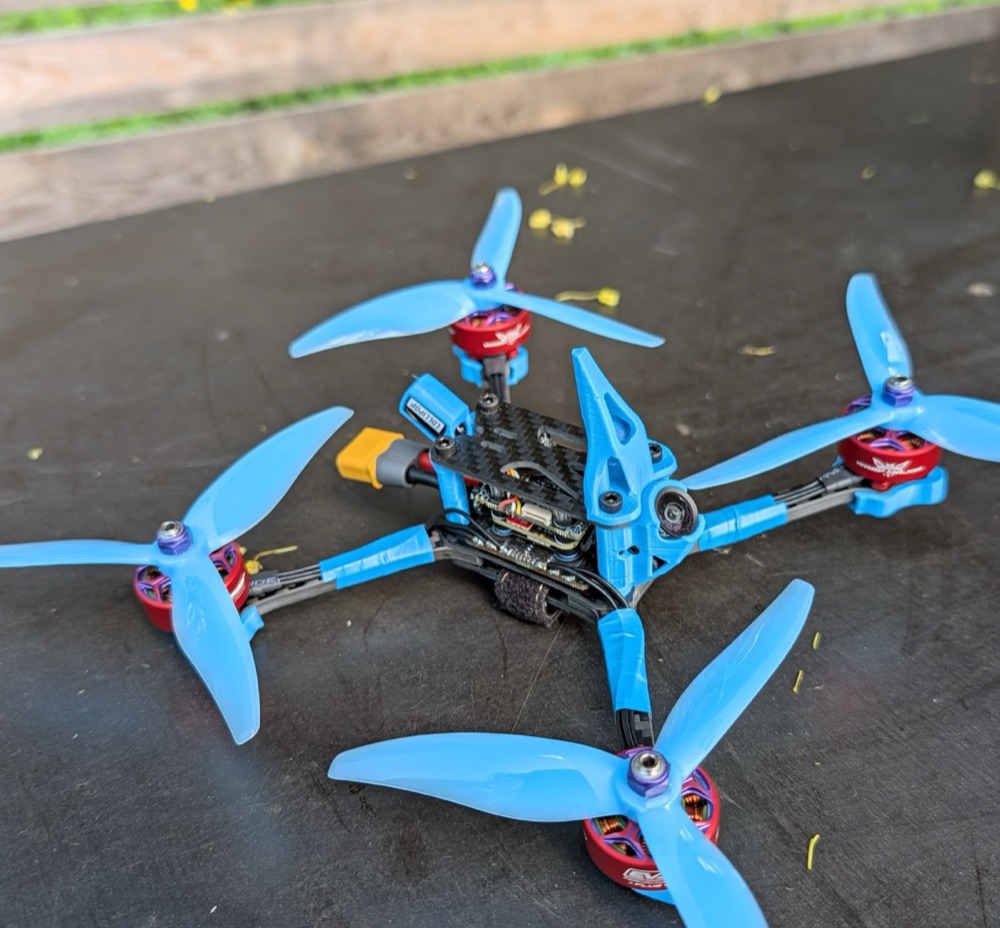
After retiring the Borg FC, I kept the iFlight 60RS ESC in rotation by pairing it with a standard low-profile flight controller.
Fortunately, direct-soldering FC harness wires to the 60RS ESC is straightforward:
- The signal and telemetry pads on the ESC are well-spaced, clearly labeled, and appropriately sized for direct wire soldering.
- Ditching the Borg FC drastically reduced stack height, easily accommodating the HDZero Race VTX and providing ample clearance for the camera MIPI cable.
Specifications & Feature Breakdown
| Feature / Spec | iFlight Borg FC | iFlight 60RS ESC |
|---|---|---|
| Mounting Pattern | 20x20mm | 20x20mm |
| Current Rating | N/A | 60A Continuous / 70A Burst |
| Firmware | Betaflight | AM32 (Tested on 2.20) / BLHeli_32 |
| Special Feature | Integrated ExpressLRS RX | Integrated Capacitor Matrix |
| Clearance / Form Factor | Poor (Tall 2-sided layout) | Slim profile, tight pad spacing |
| Direct Soldering | Awkward single plug | Clean, well-spaced FC pads |
Pros & Cons
Pros
- Integrated ESC Capacitors: Truly delivers clean video and gyro performance without an external capacitor on 5-inch builds.
- ESC Direct Soldering: Easy-to-solder FC communication pads make it versatile for hybrid builds with other flight controllers.
- Lightweight Concept: An all-in-one vision that significantly reduces build wire count.
Cons
- FC Component Layout: Dual-sided tall components make the stack height unsuitable for slammed race frames.
- Mechanical Conflicts: Ceramic antenna hits HDZero VTX; peripheral plug interferes directly with the camera MIPI connector.
- ELRS Link Consistency: Unexplained RXloss glitches during race practice heats.
- Pit Solder Hazards: Tiny resistors located immediately adjacent to small motor pads make quick repairs risky.
- ESC Durability: Phase shorts from blown high-KV motors cause catastrophic board burnouts that cannot be repaired.
Where to Buy
- AliExpress (Recommended): Even though price advantages have narrowed, buying directly via AliExpress is still the best route. High factory turnover means you consistently receive significantly newer board revisions from recent production runs, avoiding the early hardware quirks and component batches that plague older stock.
- Local EU Retailers (Rotorama, etc.): With the new €3 EU import tax on direct imports from China, the final price difference between buying from AliExpress versus local EU shops (like Rotorama) is practically negligible. If you need a replacement board overnight for a weekend race, local shops are great - just be aware that local resellers often hold older warehouse stock with earlier board revision numbers.
Final Verdict
The iFlight Borg Stack represents a compelling concept that ultimately stumbles in physical execution.
If you are building a slammed 5-inch racing drone with HDZero or digital FPV, skip the Borg FC. Its clearance issues, connector placement, and RF reliability will cause headaches in the pit and on the track.
However, the iFlight 60RS ESC on AM32 2.20 is worth considering if you want a clean capacitor-free build - provided you have the soldering precision to navigate its tiny neighboring resistors and don't mind sacrificing field repairability when pushing aggressive high-KV motors to their destruction.